When to Replace Your SaaS Stack With One Custom Tool

The average mid-sized company now pays for 112 SaaS subscriptions. The average small business pays for somewhere between 40 and 80. Most founders, if you asked them to list every tool their team uses, would miss at least a third of them.
This is not a software problem. It is a compounding tax on growth that nobody signed up for and everybody tolerates.
The instinct, when the SaaS bill gets painful, is to audit and trim. Cancel the tools nobody logs into. Downgrade the seats. Negotiate with the vendors. That helps a little. It does not fix the real issue, which is that the tools were never designed to work together in the first place.
At some point the smarter move stops being "manage the stack better" and becomes "replace the stack with something that was actually built for the job." This post is about when that point arrives, how to recognise it, and what the replacement actually looks like.
The problem is not the tools. It is the seams between them.
Every SaaS tool in your stack was designed in isolation by a team that has never met your team. The CRM does not know about the project management tool. The project tool does not know about the invoicing tool. The invoicing tool does not know about the client onboarding checklist that lives in a Notion doc.
So you paper over the seams. Zapier connects three of them. Someone on the ops team manually syncs two others. A Google Sheet holds the data that does not fit anywhere else. A Slack channel functions as an unofficial database. A weekly meeting exists to reconcile the numbers that none of the tools produce correctly on their own.
None of this shows up in the SaaS bill. It shows up in payroll, in slow onboarding, in reports that arrive three days late, in the small errors that compound into bigger ones, and in the quiet frustration of the people doing the reconciliation work.
The question worth asking is not "are my SaaS tools good?" It is "what is the total cost of running my operations the way I run them right now?" Almost always, that number is two or three times higher than the subscription line on the invoice.
Five signals your stack is ready to be replaced
Not every business needs to consolidate. The signal is not how many tools you have. It is how much work it takes to make them behave like one.
1. The same data lives in five places and none of them agree. A client's contact details are in the CRM, the invoicing tool, the project management tool, a shared contacts list, and an older spreadsheet that nobody deleted. Updates happen in one place and never propagate. Disagreements about which version is correct happen weekly. This is the clearest signal that your operations need a single source of truth, not a better sync.
2. Your team spends real hours every week doing reconciliation. If someone on your team pulls data from three tools every Monday to build a report that tells you how the business is doing, you are paying a person to be the integration layer. Count the hours. Multiply by 50 weeks. That number is the real cost of the stack.
3. Onboarding a client, employee, or project touches four or more tools. Every new thing that enters the business triggers a setup sequence across multiple systems. Each step has a manual component. Each manual component is a place where something gets missed. The tools are not the problem. The fact that setup is not a single action is the problem.
4. You have paid for a tool three years in a row without using 80 percent of it. Most SaaS pricing is tiered so you pay for a whole suite to unlock the one feature you actually need. Across five or six tools, this adds up fast. If you mapped the features you use against the features you pay for, the gap would be uncomfortable.
5. Your business runs on a spreadsheet that shadows your software. This is the loudest signal. If the real source of truth is a spreadsheet that someone updates manually from the tools you pay for, the tools are not the source of truth. The spreadsheet is. And the spreadsheet has no permissions, no audit log, no backup, and no structure.
Two of these signals is a yellow flag. Three or more is the point where replacing the stack usually pays for itself inside a year.
What "one custom tool" actually means
The phrase "replace your SaaS stack with one custom tool" sounds extreme. In practice it is more surgical than it sounds.
You are not rebuilding Gmail. You are not rebuilding Xero. You are not rebuilding Slack. The tools that are already good at generic jobs stay where they are.
What gets replaced is the middle layer. The custom, messy, stitched-together part where your actual operations live. The CRM that is almost right. The project tool that is almost right. The invoicing tool that is almost right. The manual reconciliation that glues them together.
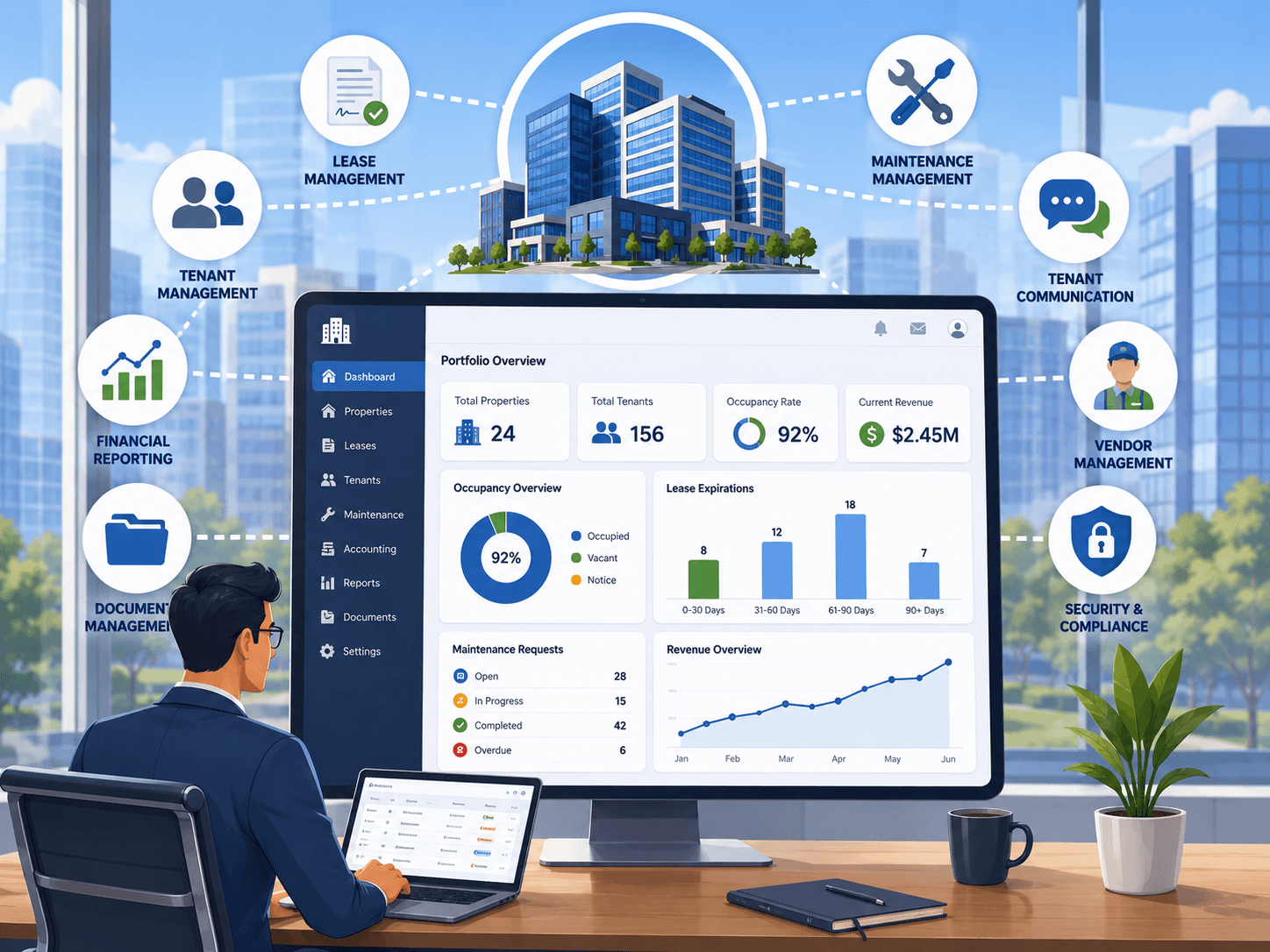
A single custom internal tool, built around how your business actually works, absorbs that middle layer. It holds your clients, your projects, your pipeline, your onboarding, your internal workflows, your reporting, and your team's daily actions. It connects to the SaaS tools that stay (email, accounting, payments) through APIs that do the syncing automatically instead of manually.
The result is usually not one tool replacing twelve. It is one custom tool replacing five or six of the middle-layer SaaS tools, while the genuinely specialised ones stay in place. The subscription bill drops meaningfully. The reconciliation work disappears. The reporting becomes real time. The team gets back the hours they were spending on plumbing.
The math that usually tips the decision
Founders often ask whether custom is cheaper than SaaS. The honest answer is: it depends on when you measure.
In the first year, SaaS almost always looks cheaper because the build cost is front loaded. By year two, the picture starts to shift. By year three, custom is usually significantly cheaper, and the gap widens every year after.
Here is a typical shape for an SMB running 30 users across five middle-layer SaaS tools:
Combined SaaS subscriptions: roughly 2,500 to 5,000 dollars per month, climbing as you add seats
Three-year subscription total: 90,000 to 180,000 dollars
Custom tool build cost: 20,000 to 50,000 dollars one time
Ongoing hosting and maintenance: 300 to 800 dollars per month
Three-year custom total: roughly 30,000 to 80,000 dollars
The build cost is the scary number because it is visible. The subscription cost is the dangerous number because it compounds invisibly.
That is before you count the operations time saved, the faster onboarding, the cleaner data, and the fact that you own the asset at the end instead of renting it forever.
When replacing the stack is the wrong move
This is not a universal answer. There are clear cases where consolidation is not worth it.
You are under 10 people. At small scale, the overhead of running any system is low enough that stitched SaaS is usually fine. Wait until the seams actually hurt.
Your processes are still changing every month. Custom software is worth building around stable workflows. If your operations are still being invented in real time, lock them in with SaaS and revisit in six months.
The workflows are genuinely generic. A 15 person agency that just needs project management, time tracking, and invoicing probably does not need custom. Off the shelf fits because the work is not differentiated.
You cannot commit to the build and handover. Custom software done well requires someone on your side to own decisions during the build. If nobody has bandwidth for that, the project will drift. Better to wait than to half commit.
The right moment is usually the one where your workflows have settled into their adult shape, the team is big enough that inefficiency costs real money, and you have enough repeatable pain to know exactly what "better" looks like.
How the replacement actually happens
Done badly, stack replacement is a nine month project that blows past scope and gets abandoned halfway through. Done well, it is a focused, phased build that replaces the worst offenders first and leaves the rest alone.
The approach we use at Frontbits:
Phase one: map the real stack. Every tool, every workaround, every spreadsheet that holds real data. This usually takes a week and reveals two or three tools nobody remembered they were paying for.
Phase two: identify the core workflows. The three or four operational motions that define how the business actually works. Client onboarding. Project delivery. Invoicing cycle. Internal reporting. Not everything, just the ones that drive revenue and eat time.
Phase three: scope one tool that owns those workflows. Fixed scope, fixed price, clear handover date. The tool is designed around the way the business runs, not around vendor opinions.
Phase four: phased rollout. Replace one workflow at a time. The team sees value in week two instead of month nine. Old SaaS tools get retired one by one as the custom tool absorbs their function. Nothing goes dark while something else is still critical.
This is the opposite of the big bang replacement that gives custom software a bad reputation. Incremental, scoped, and designed to deliver value before it is finished.
The short version
Your SaaS stack is not too expensive because the subscriptions are too high. It is too expensive because the seams between the tools have turned your operations team into an integration layer.
Consolidating into one custom tool is not the right answer for everyone. It is the right answer when your data is fragmented across five systems, when reconciliation is a weekly job, when onboarding touches too many tools, and when the spreadsheet running your business has quietly become more important than the software you pay for.
The build cost is real. The ongoing savings are bigger, and the operational wins are usually the part that matters most. Owning the tool that runs your business is not a luxury. For SMBs past a certain size, it is the difference between scaling with friction and scaling cleanly.
If you recognise your own business in too many of the signals above, the next step is not a proposal. It is a conversation about what your stack actually looks like today and whether the math tips. That is the 60 minute audit Frontbits runs with SMBs deciding whether to consolidate. Fixed scope, fixed pricing, and an honest answer at the end of it, including the answer where we tell you to stay with SaaS.